

报 告 人:Tang Junwang (唐军旺)教授
报告时间:2026年4月16日(星期四)14:30
报告地点:新能源大楼附楼102会议室
报告人简介:
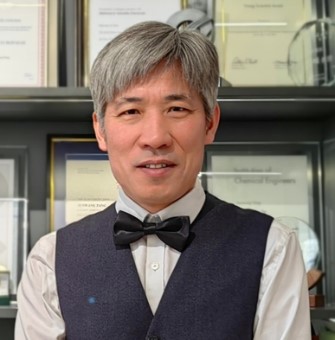
Tang Junwang (唐军旺)教授,欧洲科 财神捕鱼 院士(The Academia Europaea), 英国科 财神捕鱼 -利弗休姆资深研究员, 比利时欧洲科 财神捕鱼 院士,英国皇家化学会会士, 国际材料和矿物协会会士和中国化学会名誉会士。曾任伦敦大学 财神捕鱼 大学材料中心主任,化学工程系材料化学和材料工程主席教授,中国国家高层次人才,教育部长江讲座教授,全英华人正教授协会副主席等。目前是清华大学化工系工业催化中心主任,清华大学首任碳中和讲席教授。Tang教授开创性的利用光和热协同催化活化小分子(H2O, N2、CH4, CO2)来实现可再生能源的转化和存储为氢能,绿氨和绿醇,以及微波催化来循环固废塑料。同时致力于用时间分辨光谱研究光和热耦合催化的机理。迄今已在国际杂志Nature, Nature Catalysis, Nature Energy, Nature Materials, Nature Sustainability, Nature Reviews Materials, JACS等能源和化学领域期刊共发表了>250篇文章,授权/申请25项专利,也多次被评为科睿唯安高被引科学家。同时是4个国际杂志的编辑或者副主编,包括Applied Catalysis B,EES Solar。获得多个国际大奖,包括:2025 德国跨界创新基金会(Falling Walls Foundation)国际跨界创新工程与技术类别奖,国际化学工程协会2022油气转化大奖(IChemE Oil and Gas Global Awards),2021皇家化学协会RSC Corday-Morgan Prize等。
报告摘要:
Photon-driven small molecules activation, eg. H2O splitting, is scientifically and industrially of significance as it promises an efficient pathway for green H2 production. However it is kinetically very challenging due to a multi-electron process [1]. For green chemicals synthesis, other inert molecules activation (e.g. N2, CO2 and CH4 etc) are equally important while rather challenging.
Our early study on charge dynamics in inorganic catalysts reveals that the current low solar to fuel/chemical conversion efficiency is due to both fast charge recombination and sluggish oxidation reaction [2], we thus developed effective material strategies to improve the activities of catalysts. Typically, we found that photon-phonon codriven process over single atom catalysts could dramatially improve H2 production [3]. Furthermore, this new process has been demonstrated duirng catalytic C1 conversion to C2 [4] and C2 to C4 [5], both achieving the benchmark results in the related fields. Very recently, we developed a new concept of an intramolecular junction, which is composed of alternate benzene and triazine motifs in CTF polymer. Such structure can facilitate fast charge separation and is characterised by spatially separated reduction and oxidation sites in one molecular unit, thus substantially improving the methane conversion to ethanol and mitigating the overoxidation to CO2, which together with photon-phonon co-driven catalysis results in an unprecedented ethanol yield and selectivity of 80% operated under mild condition [6].
References:
[1].Wang, Y., Vogel, A., Sachs, M., Sprick, R.S., Wilbraham,L., Moniz, S.J.A., Godin, R., Zwijnenburg, M.A., Durrant, J.R., Cooper, A.I., Tang, J, Nature Energy,2019, 4, 746-760.
[2].Tang, J., Durrant J.R., Klug, D.R., J. Am. Chem. Soc.,2008, 130 (42) 13885-13891.
[3].Wang, H., Qi, H., Sun, X., Jia, S., Li, X., Miao, T.J., Xiong, L., Wang, S., Zhang, X., Liu,X., Wang, a., Zhang, T., Huang, W.,Tang, J.Nature Materials,2023,22, 619–626.
[4].Li, X., Li, C., Xu, Y., Liu, Q., Bahri, M., Zhang, L., Browning, N.D., Cowan, A.J., Tang, J., Nature Energy,2023, 8, 1013–1022.
[5].Qin, Z., Wang, C., Guo, J., .. Tang, J. J. Am. Chem. Soc. 2026, 148, 13663-13673
[6]. Xie, J., Fu, C., Quesne, M.G., Guo, J., Wang, C., Xiong, L., Windle, C.D., Gadipelli, S., Guo, Z.X., Huang, W., Catlow, C.R.A.,Tang, J., Nature,2025, 639, 368-374.